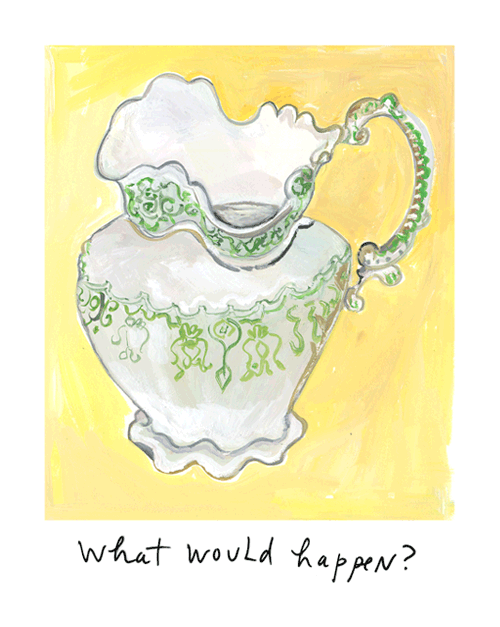
“How do you know who you are?” asks artist and author Maira Kalman in her book, The Principles of Uncertainty. I’ve not read the book, but I’ve been a fan of Kalman’s work since I first saw her blog, “And the Pursuit of Happiness” for the NYT. So when I saw this post about her at Brain Pickings today, I was once again struck by her musings.
It’s something on my mind today, this question, “How do you know who you are?”
Ten years ago today, my mother died. I dread the approach of the 29th of October like nothing else. It’s coming up, I think. Is there any way to get out of it? It’s silly, really. Well, it is silly and not silly all at once. On the one hand, it is only a day. To be blunt: my mother is still dead, every other day of the year. It’s not really any better or worse on this particular date, now is it?
Nonetheless, it is still a day—the day—that, ten years ago, marked the worst day of my life. At one moment, she was here, and the next, she was not.
So every October 29th, at some point—sometimes at multiple moments throughout the day—I feel it all over again. I feel the exact feeling in my stomach that I felt 10 years ago, when I heard a nurse say, “Her heart did stop.” It is a swift kick in the stomach. When it happened this morning, I was rubbing my eyes, convincing myself to shake off my sleepy feeling. And then: BAM. I felt it.
Thanks, October 29th. I’m awake now.
After my mother died, I began thinking of my life in two parts: before Mom died, and after. Things were one way, and then they were another. I also began to think of myself in two ways: how I was before Mom died, and how I was after. It’s really no wonder one day can seem so monumental! I’m thinking of my entire life split in pieces from it.
How do you know who you are, when you are mapping so much of your identity from this loss? I hate it. I want to stop. I think of ways to stop. But it doesn’t really work that way—instead, the elaborate daydreams begin. It’s a little game I play in my brain, where I wonder what my life would be like, what I would be like, if my mother hadn’t died.
It’s a dangerous game, this game of what ifs and if onlys—and I’m tired of it, quite frankly. Of course, it might seem completely self-absorbed that, on the day of my mother’s death, I’m asking all these questions about myself, and not her. But while it’s about me, it’s still about her, all the same.
Of course I am not the same as I was when my mom died, and thank God for that! After all, I was a teenager—18, just starting freshman year of college. Now I am closer to 30 than 20. And so when I think of the question, “Who am I?” it ties into this day so perfectly because on this day, when I particularly miss my mother and feel the utter finality of her absence, I think, I never knew my mother as an adult. She never knew me. And who in the hell am I, anyway?
I don’t always have the answer to that, but I have an idea. Sometimes it changes. Sometimes I like the answer. Sometimes I don’t.
But if my mother taught me anything, it was this very important lesson:
You can be pleased with nothing when you are not pleased with yourself.
So what if I don’t have it all figured out. So what if I can’t always exactly pinpoint the answer to the question, “Who am I?”
Today I am a woman who misses her mother. Tomorrow, I will still be that woman, but it will no longer be this day, and maybe I can think of something else. All I can really try to do is be pleased with the honest answer to the question, “Who in the world am I?” and maybe, just maybe, if I’m pleased with it, it’s not unlikely that she would be too.
Like Kalman says:
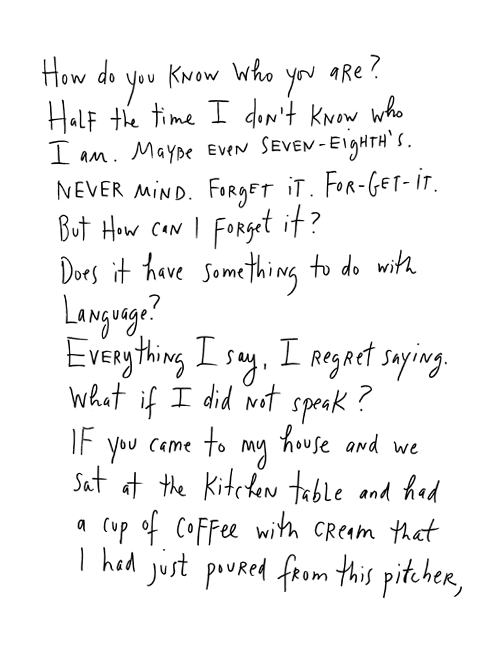
What would happen?
Showing posts with label parents. Show all posts
Monday, October 29, 2012
Sunday, January 29, 2012
Recommended Reading: Mother Loss, and Mindy
In the last couple weeks, I've read two books that were incredibly enjoyable in wildly different ways.
First up: Motherless Daughters, by Hope Edelman
I found this book last week when I was silently geeking out in the new neighborhood used bookstore, Uncharted Books. How could I not geek out?
I'd been hoping I'd find a good book to buy to show my support/ridiculous excitement over the bookstore's arrival to Logan Square, and then, there it was:
This book was an incredibly meaningful read to me, for obvious reasons. (Well, obvious if you know me, and/or you've read this blog before. And of course you know me! You are either my brother or my cat!)
The author, who lost her mother when she was 17, chronicles her own story of losing her mother while also using interviews with hundreds of "mother-loss survivors" of all ages and circumstances of how they lost their mothers. It explores how losing your mother at various ages impacts a woman (or girl, in many cases) in different ways; how a relationship (or lack of) with your father influences a woman's grief, and reality; the loss of a woman's main feminine role model; how mother-loss impacts romantic relationships. And so on. And so on.
Maybe this would be a better summary: I started reading it the following morning on my commute, and got really choked up reading the introduction.
This is why:
But also comforting, in a completely different way, was realizing through these stories just how lucky I was, and am. The chapter, "Daddy's Little Girl" was a little painful to get through (in part because I hate that title). The author discusses four different types of fathers. I got through the first three, including the I'm Okay, You're Okay Father, The Helpless Father, and then The Distant Father, and thought, What the hell? None of these reminded of my father at all. But then I got to the fourth one, The Heroic Father. I hate to admit, at first I was a little skeptical. Really? Heroic? Seemed a bit extreme.
But then she goes on to describe this "heroic" father with various examples:
Well, then. There you have it. Heroic is right. Sheesh. My dad's awesome.
Okay, so, that book. Feelings! (But seriously, it was incredible.)
Midway through all this reading about mother-loss, and grieving, and relationships, I took a break to read a different book. It was a wee bit of a lighter read:
I love Mindy Kaling. (You might know her from a little show called "The Office.") I may or may not tweet about her on a semi-regular basis.
I'd read a couple of excerpts from this book already, one published in The New Yorker and the other in Glamour. The rest of the book did not disappoint. In fact, I read it in one sitting. And I LOL'ed throughout. And this introduction was particularly funny:
Next up, I'm going to either read A Tree Grows in Brooklyn (I think I read it when I was about 14, but I can't remember, yikes) or I'm going to take my second attempt at reading The Golden Notebook.
And considering I've run out of episodes of Luther to watch for the time being, looks like it's back to the books.
Happy reading, fellow nerds!
First up: Motherless Daughters, by Hope Edelman
I found this book last week when I was silently geeking out in the new neighborhood used bookstore, Uncharted Books. How could I not geek out?
1) A used bookstore, in the neighborhood.
2) Huge women's studies section (now this is huge, relatively speaking. This is not a big bookstore. We're talking four or five shelves here.)
I'd been hoping I'd find a good book to buy to show my support/ridiculous excitement over the bookstore's arrival to Logan Square, and then, there it was:
This book was an incredibly meaningful read to me, for obvious reasons. (Well, obvious if you know me, and/or you've read this blog before. And of course you know me! You are either my brother or my cat!)
The author, who lost her mother when she was 17, chronicles her own story of losing her mother while also using interviews with hundreds of "mother-loss survivors" of all ages and circumstances of how they lost their mothers. It explores how losing your mother at various ages impacts a woman (or girl, in many cases) in different ways; how a relationship (or lack of) with your father influences a woman's grief, and reality; the loss of a woman's main feminine role model; how mother-loss impacts romantic relationships. And so on. And so on.
Maybe this would be a better summary: I started reading it the following morning on my commute, and got really choked up reading the introduction.
This is why:
When my mother died, I knew no woman my age who had experienced mother loss. I felt utterly and irrevocably alone. In college, where new friends knew only as much about me as I was willing to reveal, I told few people my mother had died. Besides being unable to mention her death without breaking down, I was frightened by other people's pity. It marked me as someone different, an outsider, an orphan worthy of compassion at a time when I desperately longed for the anonymity of a crowd. In my dormitory, in my sorority, I felt as if I wore a scarlet letter visible only to me, a personal reminder of what felt like a source of shame. The other freshmen I knew had mothers who wrote letters, sent care packages, and called every Sunday at noon. When the women on my floor pulled their telephones into the hallways, I sat crosslegged on my bed and feigned interest in a human origins textbook. In conversation, I became as evasive as a defensive politician, making deliberate references to "my family" rather than "my parents" and carefully constructing sentences that never referred to my mother in the past tense.I could have written this paragraph about my own experience, practically verbatim. (Eliminating, obviously, the sorority part.) Throughout the book, there were similar moments. This was incredibly comforting and powerful to read, particularly when I read the stories of women who lost their mother between the ages of 17 and 20, because I could relate to them the most. (I was 18, two months into my freshman year at college.)
But also comforting, in a completely different way, was realizing through these stories just how lucky I was, and am. The chapter, "Daddy's Little Girl" was a little painful to get through (in part because I hate that title). The author discusses four different types of fathers. I got through the first three, including the I'm Okay, You're Okay Father, The Helpless Father, and then The Distant Father, and thought, What the hell? None of these reminded of my father at all. But then I got to the fourth one, The Heroic Father. I hate to admit, at first I was a little skeptical. Really? Heroic? Seemed a bit extreme.
But then she goes on to describe this "heroic" father with various examples:
Samantha's father held a full-time job, headed a household, and attended to his five children's emotional and physical needs. He was a 'heroic father,' and his daughter credits him with the security and emotional strength she feels today...After her mother's death when Samantha was fourteen, her father continued and even deepened his relationship with his four daughters and one son when he became their only parent.
The heroic father typically shared child-rearing and household tasks when his wife was present and had warm, loving relationships with his children before their mother died.
The heroic father isn't perfect and is still prone to bouts of depression or doubt, but he's still clearly a parent in control. Despite his own grief, he manages to maintain a safe, supportive environment that absorbs some of the shock of a daughter's loss and helps her continue developing confidence and self-esteem... Unlike daughters of helpless or distant fathers, who must either withdraw some of their dependency or face disappointment, the daughter of a heroic father has a dad she can depend on. Even as an adult, she typically continues to rely on him for emotional support.
Well, then. There you have it. Heroic is right. Sheesh. My dad's awesome.
Okay, so, that book. Feelings! (But seriously, it was incredible.)
Midway through all this reading about mother-loss, and grieving, and relationships, I took a break to read a different book. It was a wee bit of a lighter read:
![]() | |
| Lola, my dad & Deb's cat, making her first appearance on the blog. She did not read the book. |
I love Mindy Kaling. (You might know her from a little show called "The Office.") I may or may not tweet about her on a semi-regular basis.
I'd read a couple of excerpts from this book already, one published in The New Yorker and the other in Glamour. The rest of the book did not disappoint. In fact, I read it in one sitting. And I LOL'ed throughout. And this introduction was particularly funny:
Thank you for buying this book. Or, if my publisher's research analytics are correct, thank you, Aunts of America, for buying this for your niece you don't know that well but really want to connect with more.My Aunt Linda gave me the book.
Next up, I'm going to either read A Tree Grows in Brooklyn (I think I read it when I was about 14, but I can't remember, yikes) or I'm going to take my second attempt at reading The Golden Notebook.
And considering I've run out of episodes of Luther to watch for the time being, looks like it's back to the books.
Happy reading, fellow nerds!
Labels:
books,
bookstores,
comedy,
dad,
grieving,
hope edelman,
loss,
mindy kaling,
mom,
parents,
reading,
the office,
uncharted books
Thursday, October 21, 2010
Poetry Slam Thursday: Some Sort of Hippie Shit
Eeek! I missed Poetry Slam Tuesday! I'm so sorry, my darlings!
Here, to make it better (or worse), is a poem I wrote two Sundays ago.
My Mother Wore Black
when she married my father.
Black, with red roses—some
"hippie shit" as my brother
Tom would say.
I look at this picture of them,
with their wide smiles
and 70s haircuts,
and I think that
they were very much in love.
Everyone says I look like my mother,
but I see this and I'm starting
to think, no,
I look like my father.
But then I see the crinkles
around his eyes, from that
big smile that hits his cheeks,
and he looks just like Jay.
So maybe I sort of look like
both of them,
and maybe
I'm also just me.
All I really know
is that my mother wore black
when she married my father
and it is some sort of "hippie
shit" that I would most
definitely do.
And since my mother wore black
I feel O.K., knowing that
maybe I look a little
like both of them,
and that maybe I do
know my mother
as well as I hope I do.
Subscribe to:
Posts (Atom)